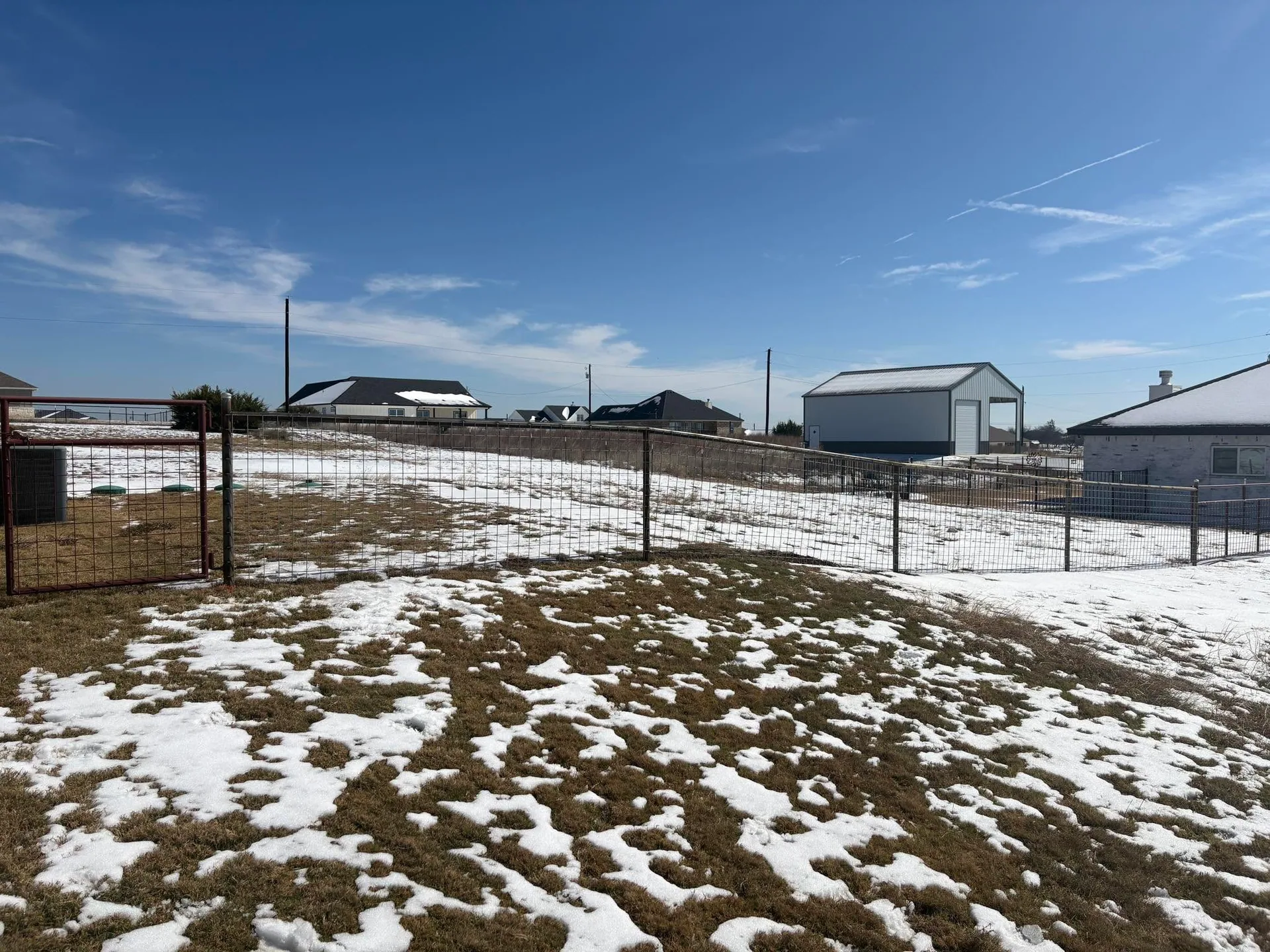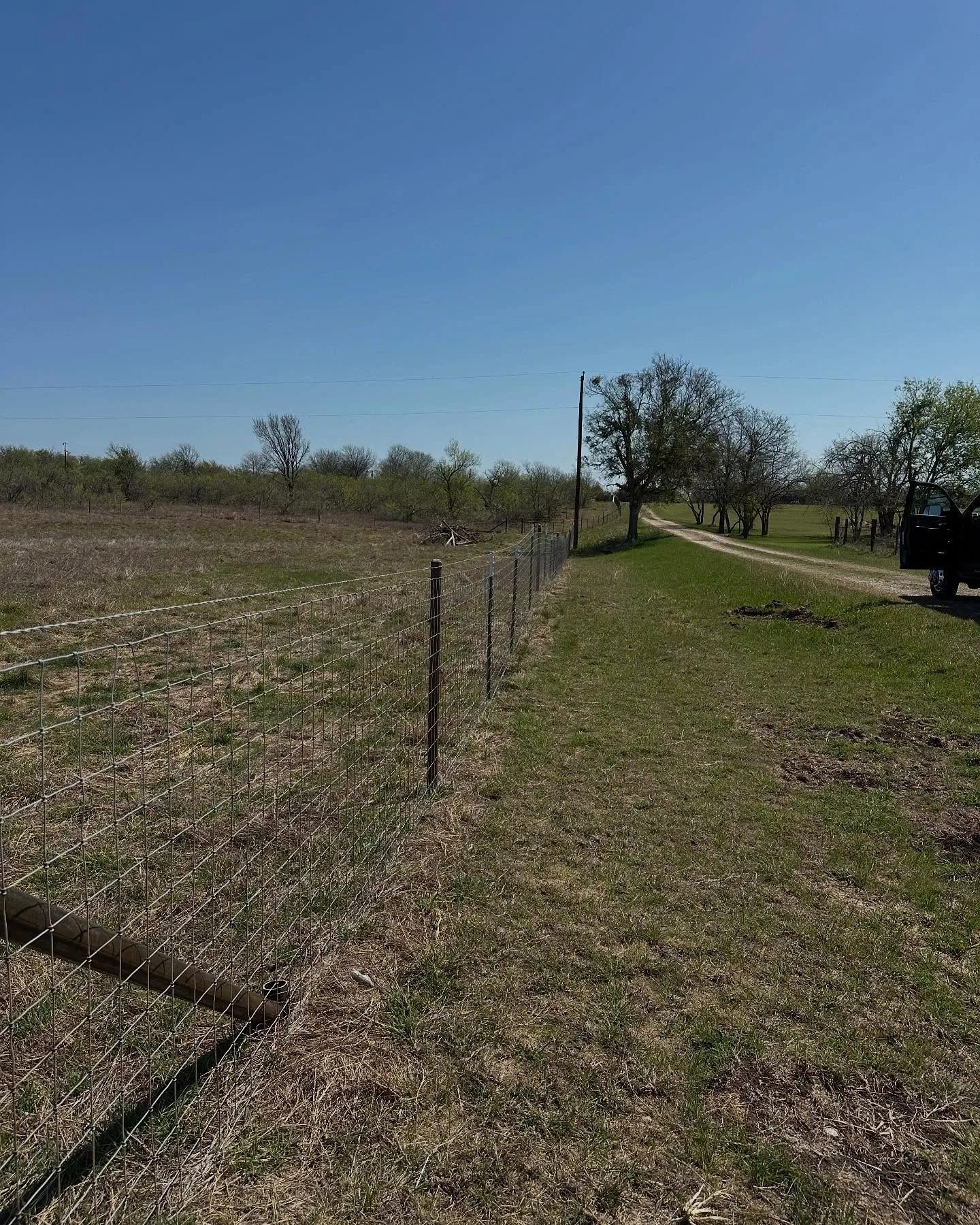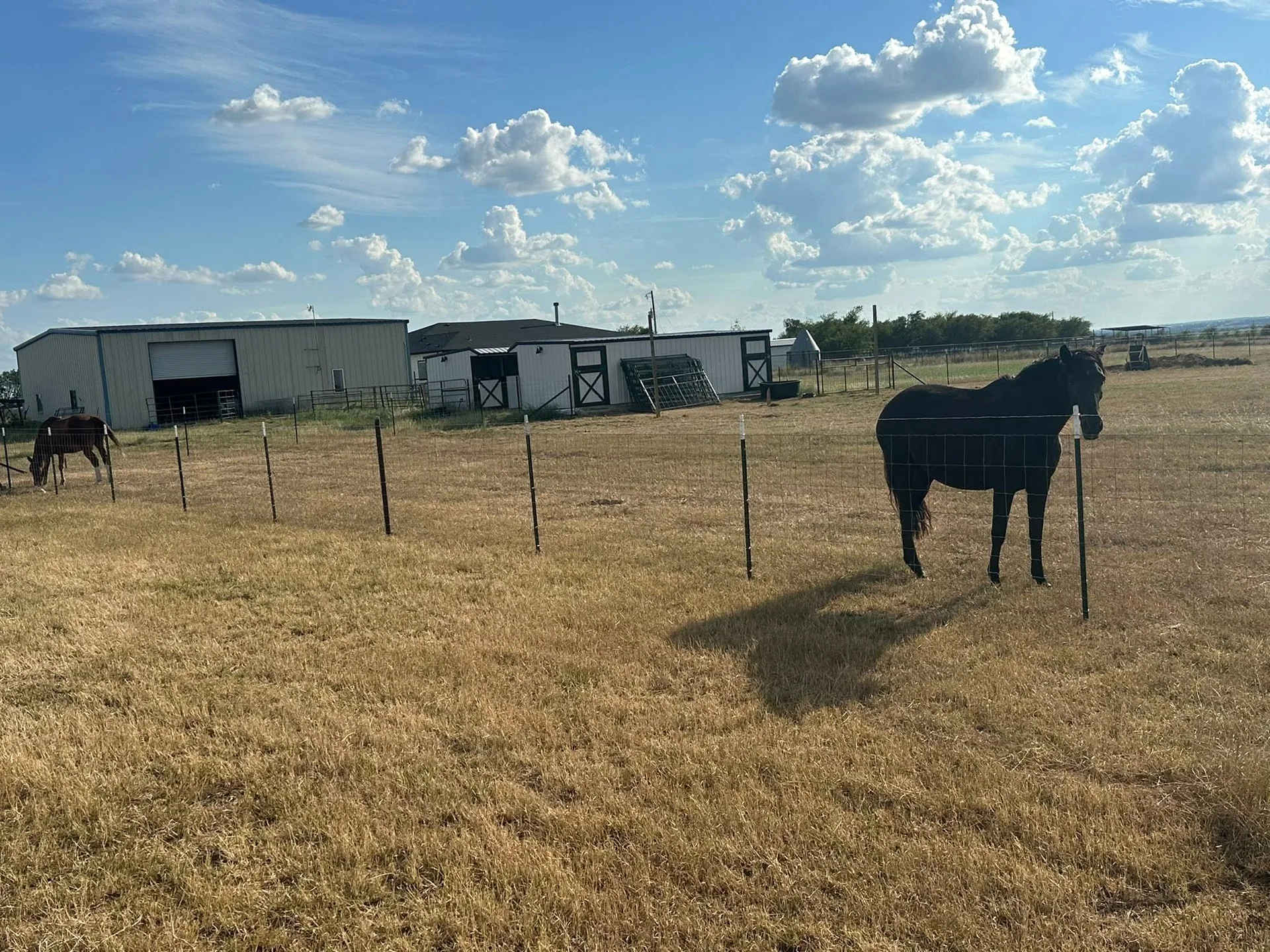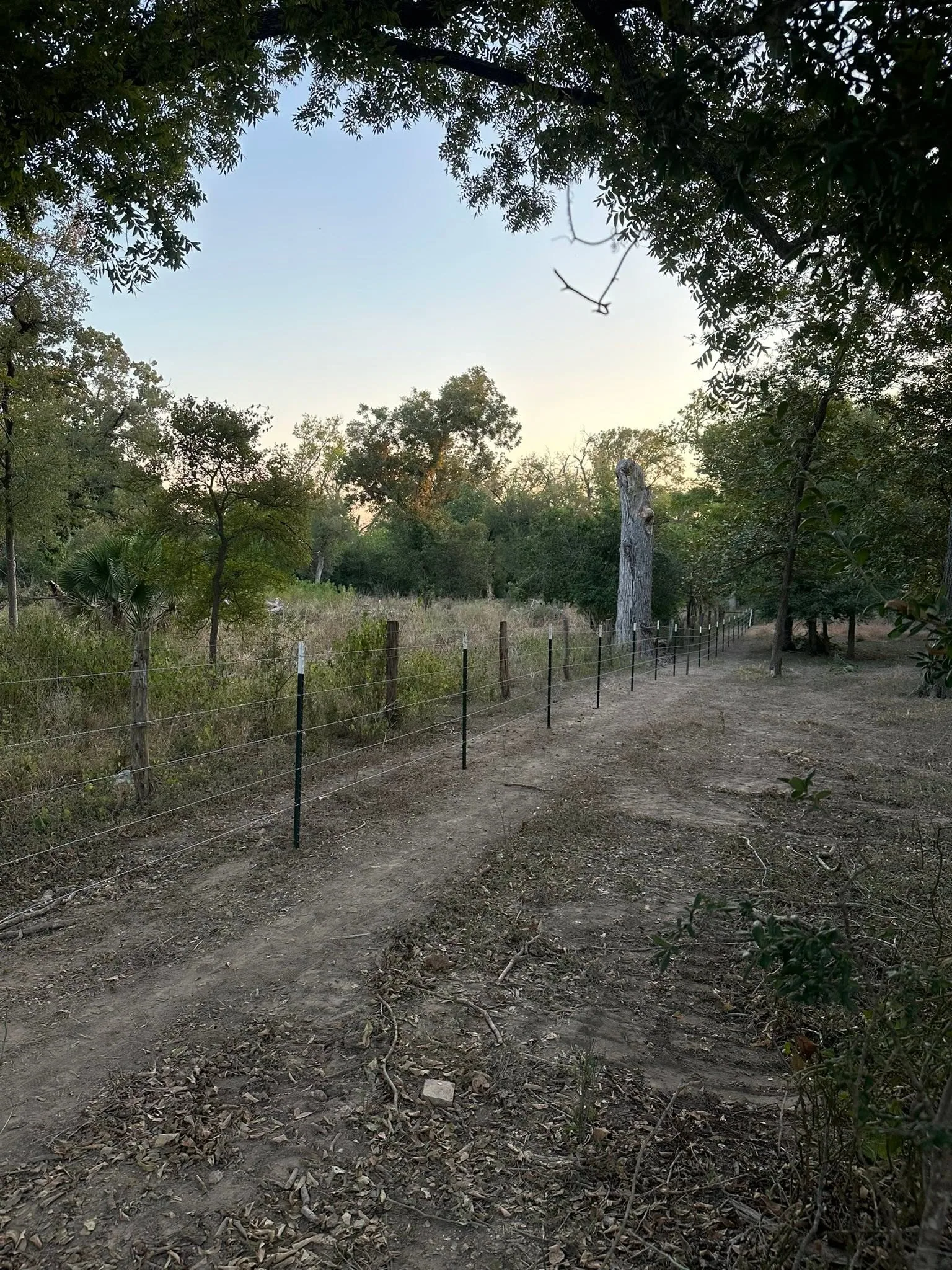
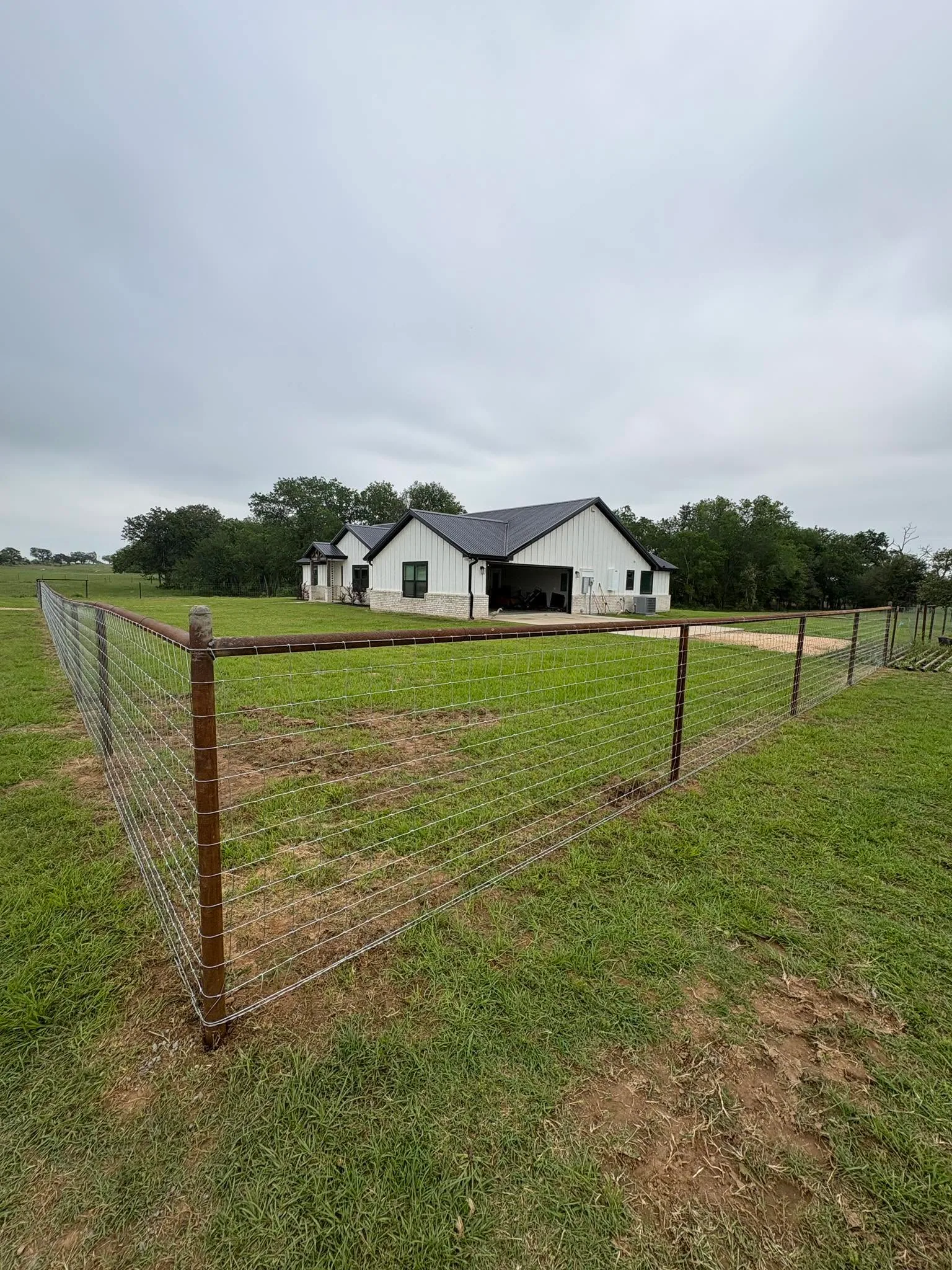
Pipe post woven wire fence corner ranch home

Farm and Ranch Fencing

Ranch Fencing in Burnet, TX for Cattle, Goats and Sheep

C2 Premier Services builds ranch fencing in Burnet, TX that holds cattle, goats and sheep on rocky Hill Country ground. Locally owned, from the first estimate to the final walkthrough. Call (512) 715-2706.

Signs Your Pasture Fence Is Ready to Replace

A fence usually shows it is failing before the livestock prove it. Wire that has lost its tension, posts that lean after a wet spring and patched sections built from three kinds of wire all mean a repair will not hold much longer.

  • Sagging or broken strands that cattle can push through or reach under
  • Corner and brace posts that have shifted, letting a whole run go slack
  • Rusted wire that snaps when you try to stretch it again
  • Goats or sheep turning up on the wrong side of a fence that still holds cattle
  • Cedar and brush grown into the line, hiding damage and pushing wire out of place

When more of the fence is patch than original, a new run of livestock fencing usually costs less over time than another season of repairs and lost animals. New ranch fencing in Burnet, TX, built for the stock you run, ends that cycle.

Livestock Fencing Matched to the Animal

Cattle, goats and sheep test a fence in different ways, so the right design starts with what you are running. Cattle lean and push, which makes strong bracing and tight wire the priority. Sheep and goats look for gaps near the ground and between strands, so the spacing of the wire matters more than the height alone.

For a cattle pasture, a barbed wire or high tensile fence with well-braced corners is the usual choice. For sheep and smaller stock, woven wire with tight spacing near the bottom keeps animals from slipping underneath. Mixed operations can combine wire types on the same line.

That flexibility matters here. Beef cattle, goats and hay are the county's chief agricultural products, so many Burnet County properties run more than one kind of animal and need a fence that works for all of them.
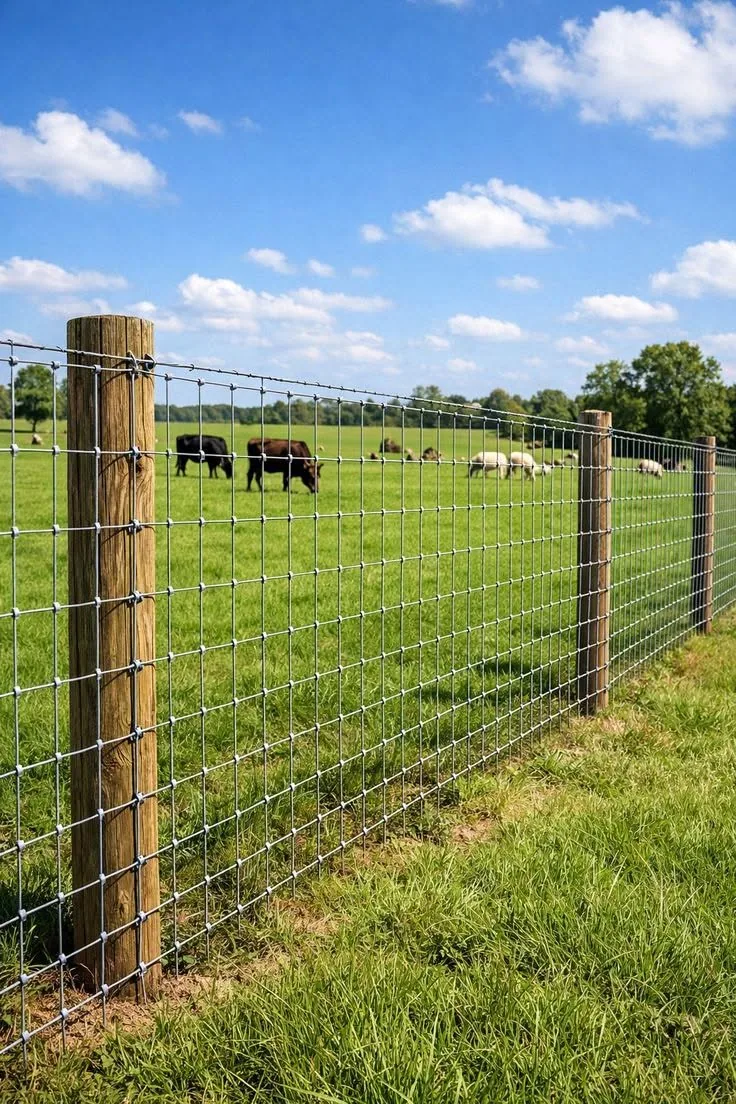
Wood post woven wire livestock fence cattle sheep pasture
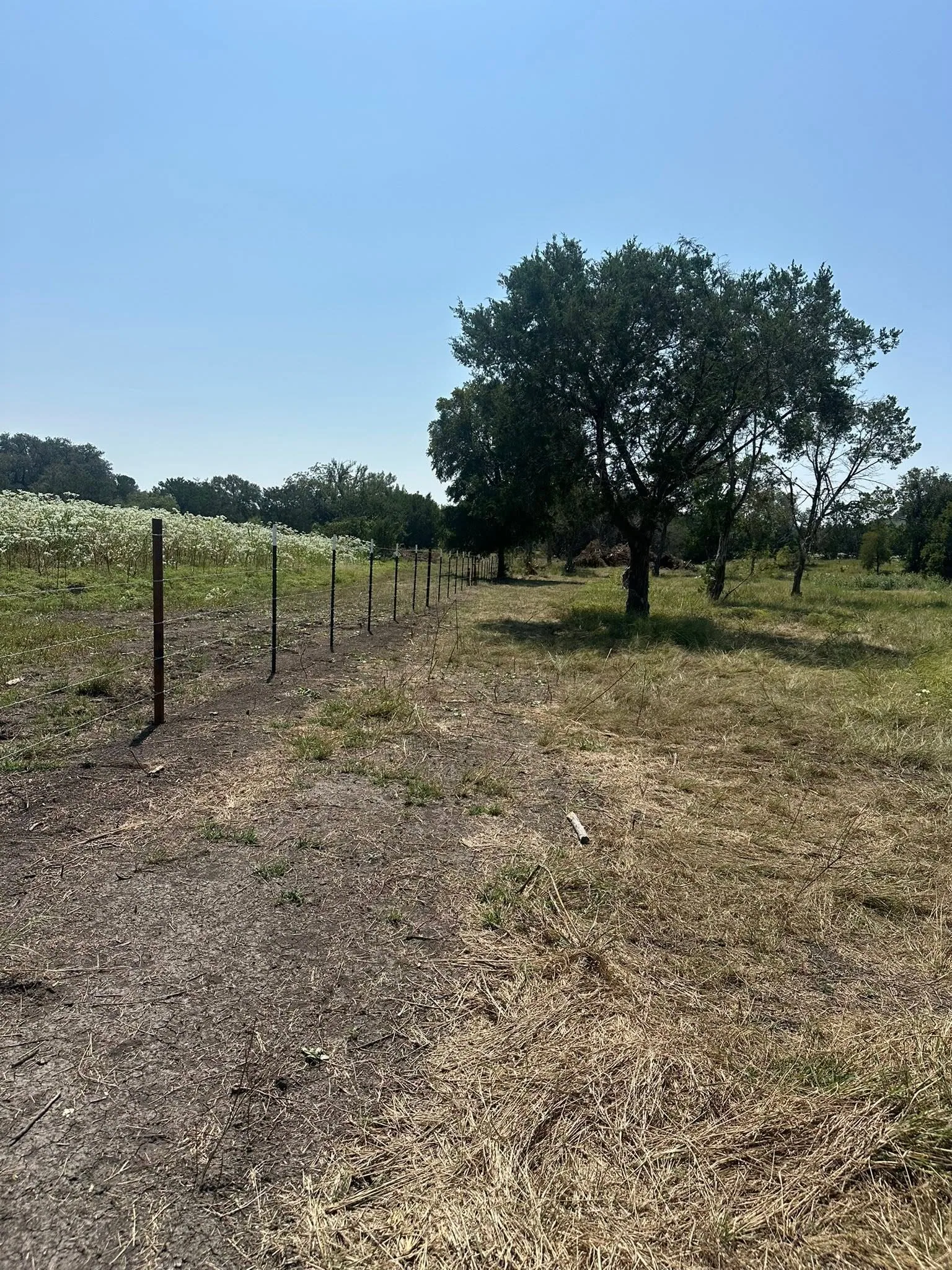
Barbed wire t post fence line wildflower field cleared strip live oak

Barbed Wire Fence Installation

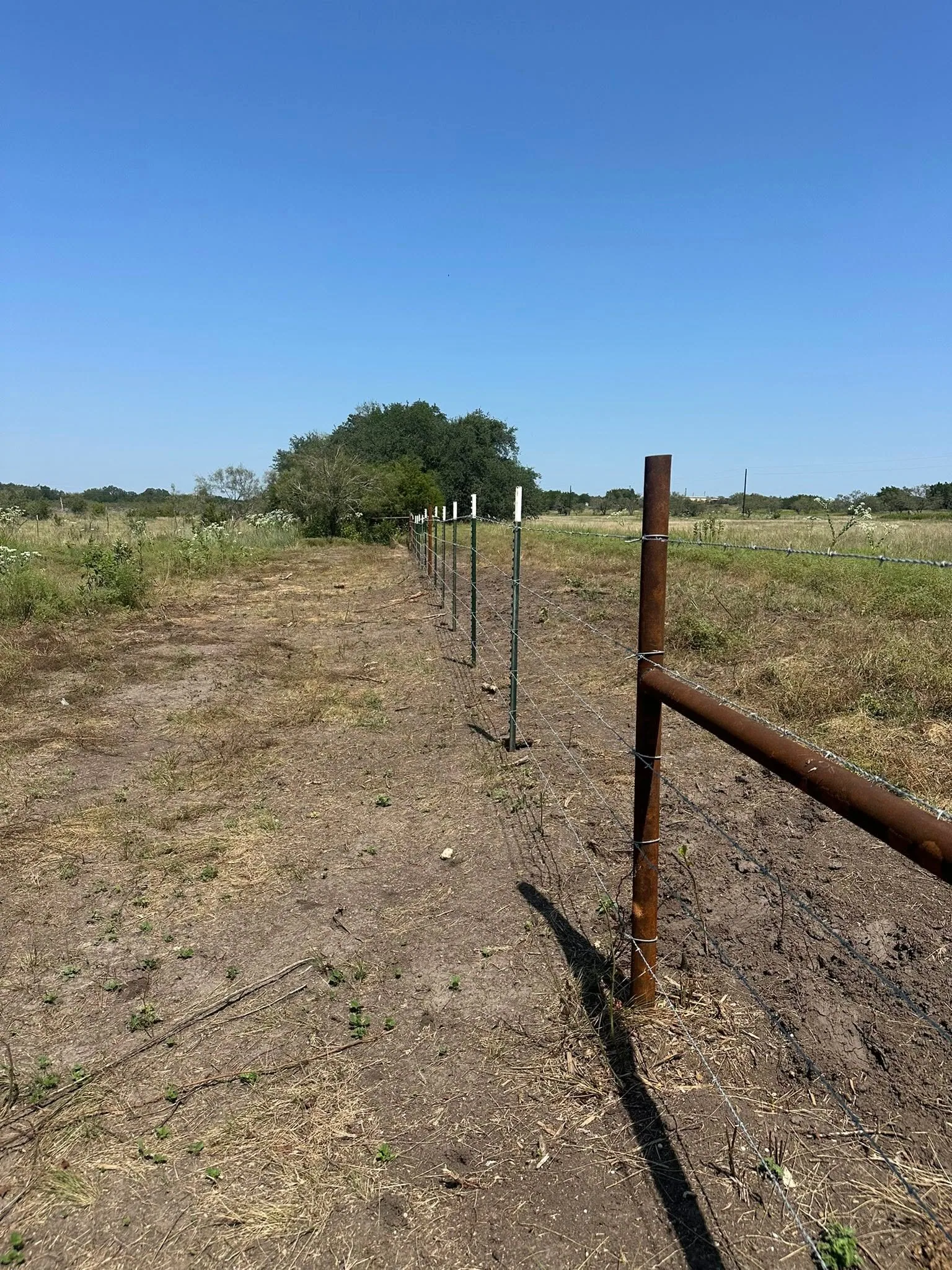
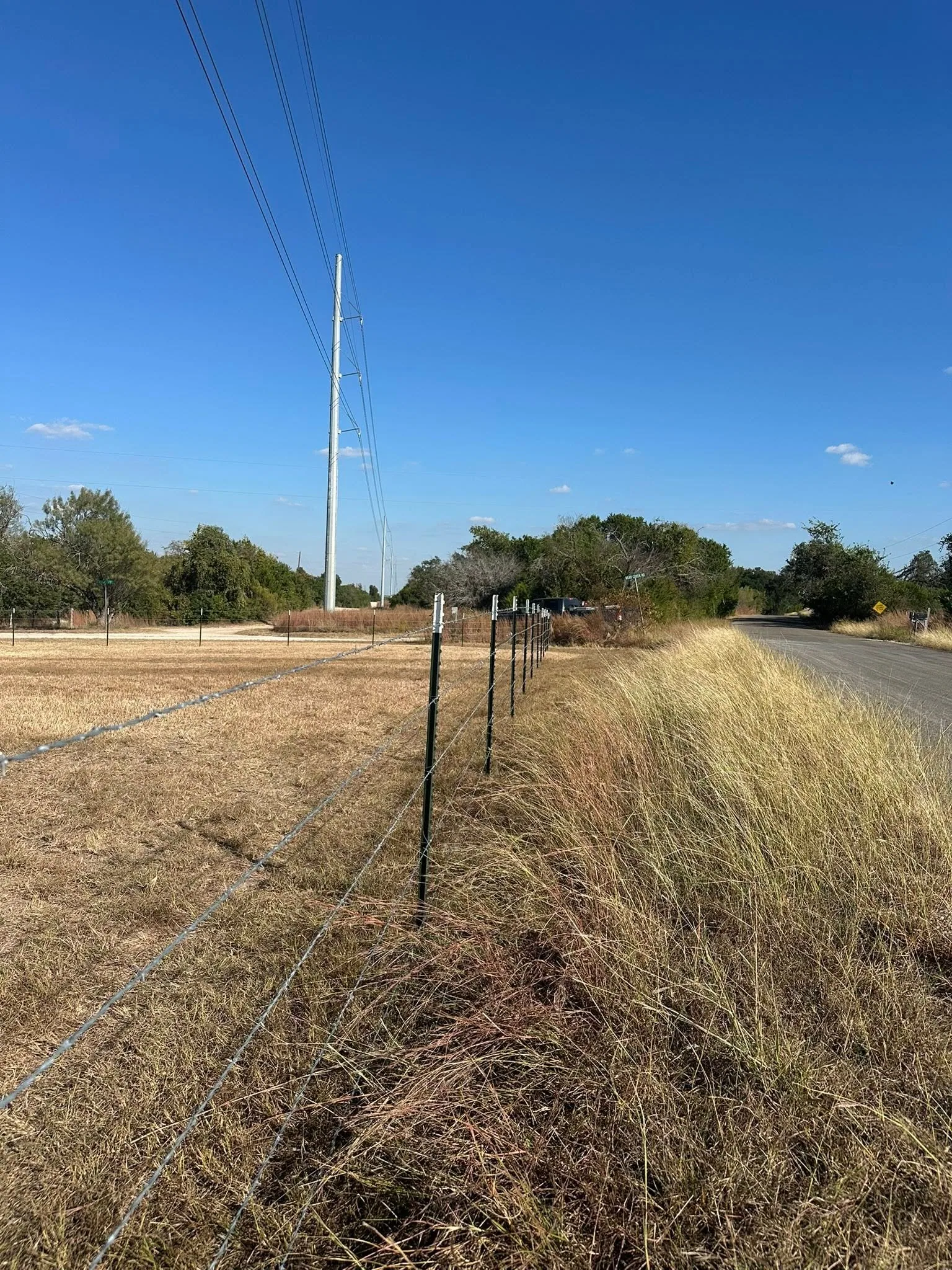
Barbed wire remains the standard for cattle pasture across Central Texas because it covers long distances economically. A good barbed wire fence depends less on the wire than on what holds it: corner assemblies and H-braces that keep the strands tight for years, and line posts spaced for the lay of the land.

Our barbed wire fence installation covers new perimeter fences, cross fences and replacement of worn runs. The number of strands, the post spacing and the post type (steel T-posts, pipe or wood) are chosen around your livestock and your ground.

Granite and limestone sit close to the surface across much of the county, so setting posts and braces is the hard part of the job. Anchoring every corner properly keeps a new fence from going slack.

Rusty pipe corner post barbed wire t post fence cleared strip texas
Barbed wire fence line steel posts rural road

High Tensile Fence Installation

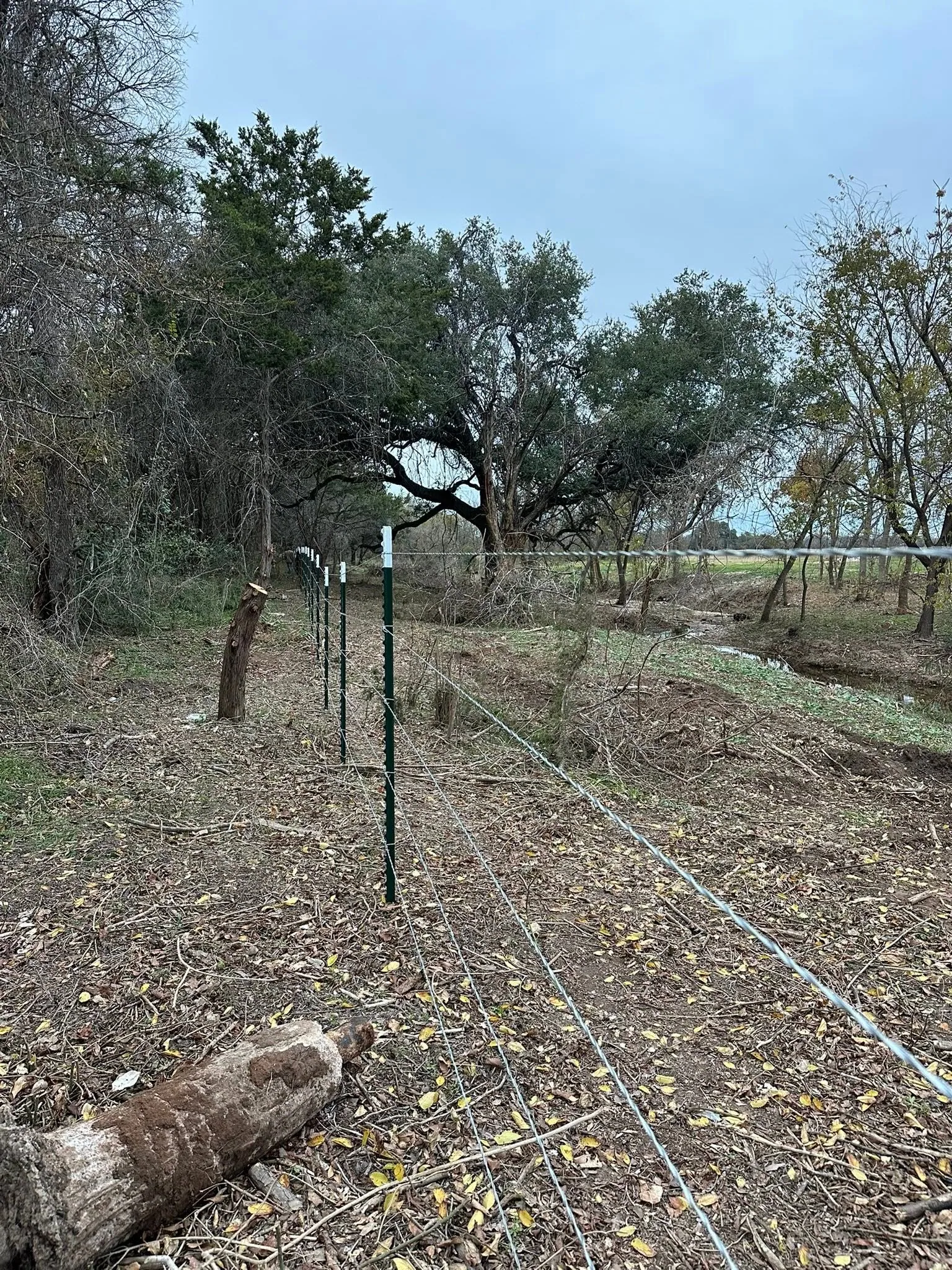
High tensile wire is made from stronger steel than conventional fence wire and is stretched to a higher tension. Often called high-tension fencing, it holds its tightness longer, can run with fewer line posts on long straight stretches and sags less under livestock pressure.

High tensile fence installation suits large pastures, long perimeter lines and ranches that want a fence that stays tight with less upkeep. Its end and corner braces carry the load of all that stretched wire, so they are built heavier than on a standard fence.

On rolling Hill Country ground, a high tensile line is laid out to follow the terrain, with extra posts in the dips and on the rises so the wire stays at a useful height. At the estimate, you get a straight answer on which wire suits your land.

High tension wire fence cleared fence line

Goat Fencing and Sheep Fencing

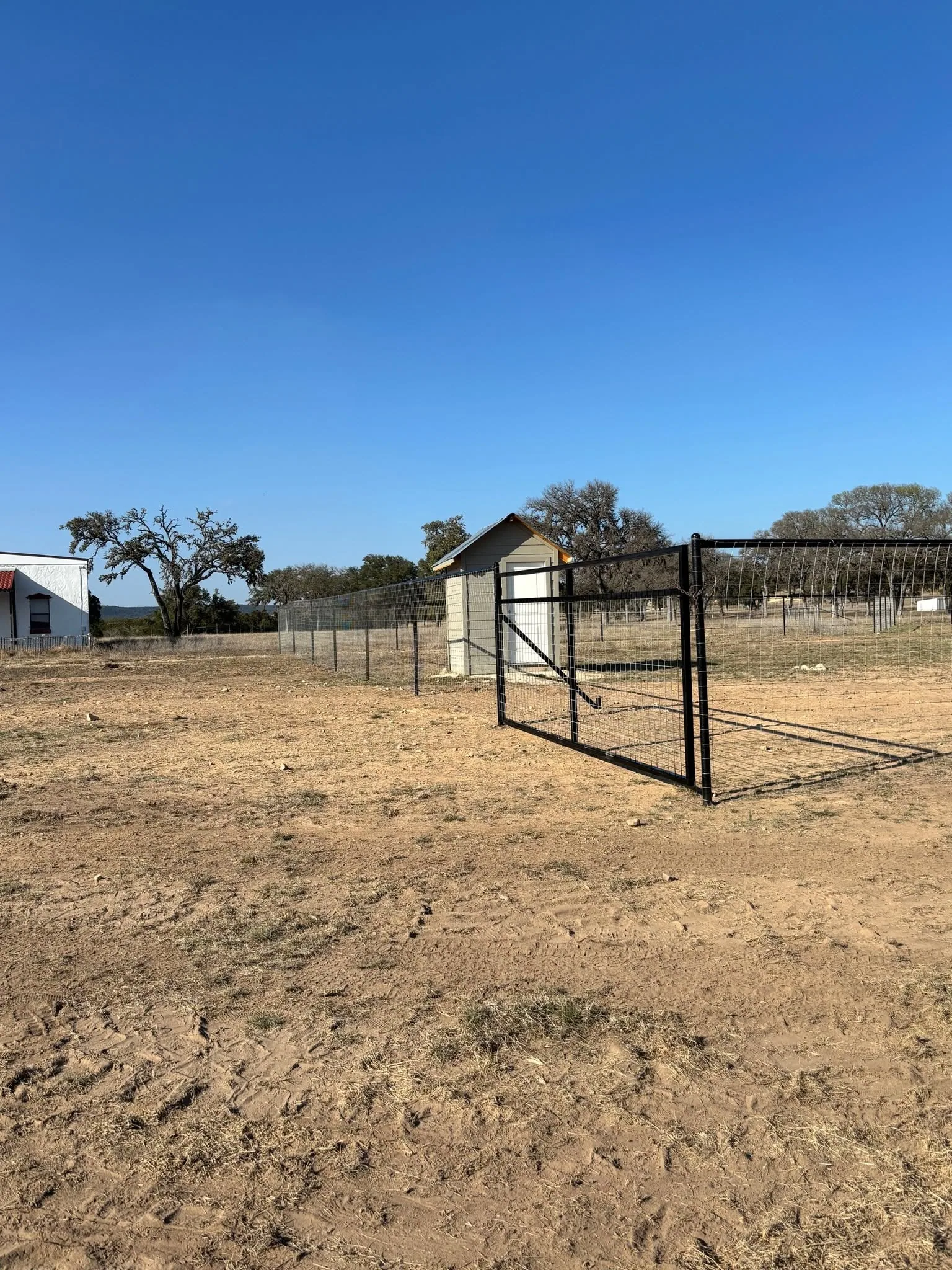
Goats are the hardest livestock to keep fenced. They climb, squeeze through gaps and test every weak spot. Goat fencing that works is usually woven wire or welded panels with small openings, set tight to the ground, often with a top strand so animals cannot climb or lean over it.

Sheep need the same attention at ground level, where a low gap under the wire is an open door for ewes and lambs. Goats and sheep have long been part of ranching in Burnet County, and plenty of local operations still run them alongside cattle.

Gates, corners and low spots are where small stock escape most often, so every dip, draw and gate opening gets extra attention to keep the bottom of the fence close to the ground. A fence that holds sheep and goats at the low spots will hold them everywhere else.

Open black pipe gate wire mesh fence small shed bare dirt lot texas
Woven wire fence pipe gate metal building

How the Work Goes

Our Ranch Fence Process

C2 Premier Services handles a ranch fence job from start to finish, so you are not coordinating one contractor for clearing, another for posts and a third for wire. Fewer handoffs mean fewer delays.

  1. Walk the Line and Estimate

    We walk the planned fence line with you and note the terrain, the livestock and any creek crossings. You get a free estimate that spells out the materials and the scope of the work.

  2. Clear the Fence Line

    Cedar, brush and rock in the path of the fence are cleared first, so posts go in straight and the wire has room. Since the same company offers land clearing, this step happens without bringing in a second contractor.

  3. Set Corners, Braces and Posts

    Corner and brace assemblies go in first, because they hold the tension of the whole fence. Line posts follow at a spacing chosen for your terrain and the animals the fence has to hold.

  4. Stretch the Wire and Walk It Together

    The wire is stretched and fastened, gates are hung, and we walk the finished fence with you to check the tension, the height and every gate before the job is called done.

What Affects the Cost of Agricultural Fencing

The price of agricultural fencing depends mostly on the length of the line and the type of fence. These factors make the biggest difference:

  • Total length, and how many corners, ends and gates the line includes
  • Wire type: barbed wire, high tensile, woven wire or a combination
  • Post type and spacing, from steel T-posts to pipe or wood
  • Terrain and rock, which change how long each post takes to set
  • How much cedar and brush must come out of the fence line first

The free estimate turns each of these into a number for your property, so you can compare options such as barbed wire against high tensile before you decide. Whatever you choose, you know the scope of your ranch fencing in Burnet, TX before work starts.

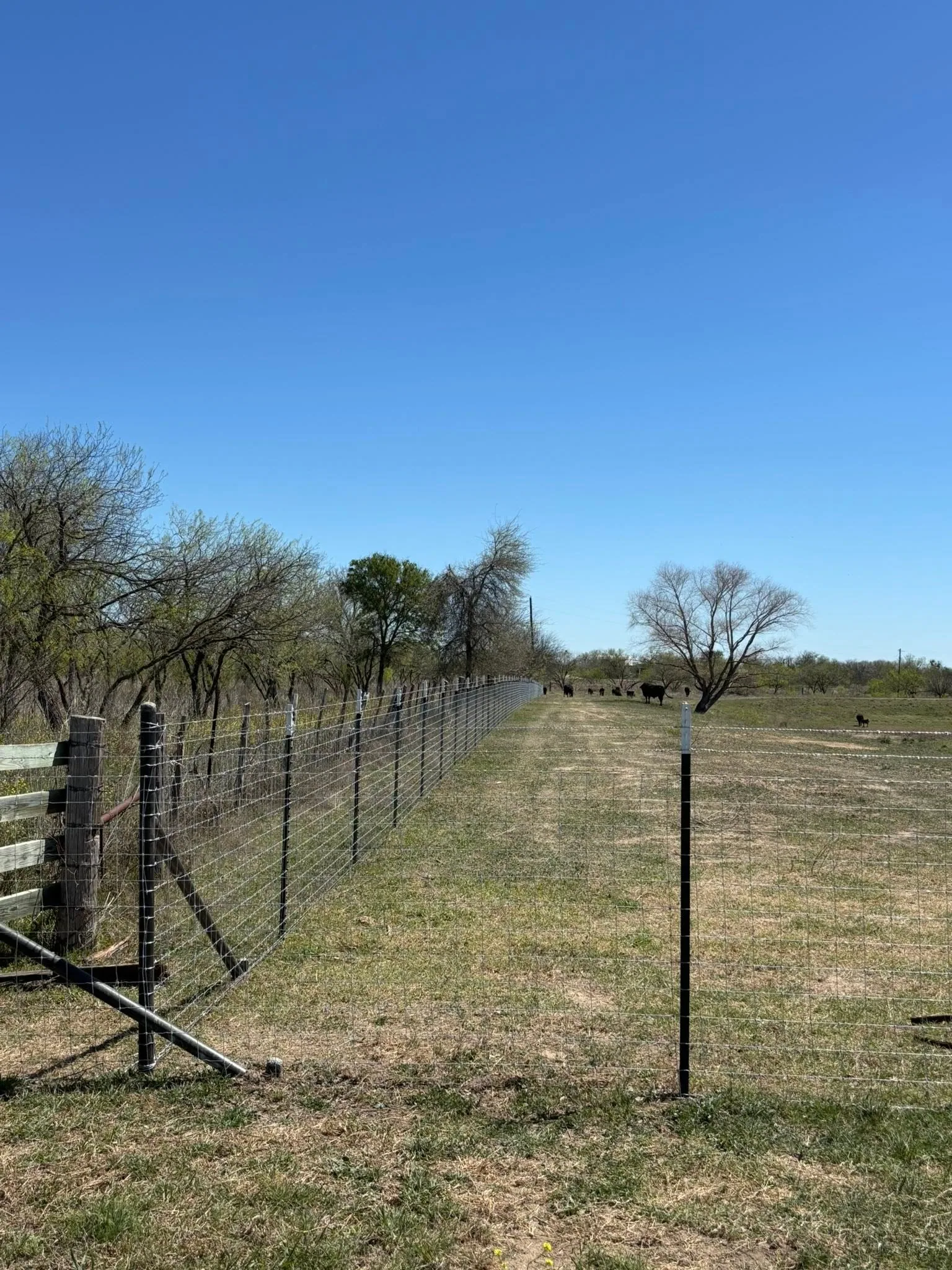
New woven wire fence line wood posts dirt ranch road clear sky

Why Ranch Owners Call C2 Premier Services

C2 Premier Services is locally owned and operated in Burnet. Our work is built on reliability: the crew shows up prepared, works efficiently and follows through on every detail, from the first estimate to the final walkthrough. The goal is ranch fencing in Burnet, TX that is done right the first time and keeps holding long after the job is finished.

The same team builds pipe fence installation for pens, alleys and entrances, and custom ranch gates for the openings in your line. The whole job, from pasture wire to the front entrance, can come from one company with one point of contact.

Fencing is one part of a wider set of fencing and land services that also covers land clearing, site preparation and metal buildings. That helps when a new fence is one part of a bigger plan for the property.

Ranch Fencing in Burnet, TX and the Surrounding Counties

Burnet sits where U.S. Highway 281 and State Highway 29 cross, and many pastures in the area border one of those roads. Texas law says a person who owns or controls cattle, horses, sheep, goats or other livestock may not knowingly let the animals roam unattended on the right-of-way of a U.S. or state highway. A sound fence along highway frontage is part of running livestock responsibly here.

Ranch fencing in Burnet, TX is the center of our work, and it reaches well beyond town. We build ranch fencing in Lampasas County pastures, ranch fencing in Marble Falls and on acreage near the lakes, and livestock fence across the acreage we cover as a fence contractor in Liberty Hill, out toward Bertram.

Closer to home, our fencing work in Burnet covers small acreage and working ranches alike, from goat pens at the house to long perimeter lines at the back of the property. Every job gets the same care at the corners.

Ranch Fence Questions

Questions Landowners Ask About Ranch Fencing

Rather talk it through?

(512) 715-2706

Monday to Friday, 8:00 AM to 7:00 PM

Is barbed wire or high tensile better for cattle?

Both hold cattle well when they are built with strong corners and braces. Barbed wire is the familiar, economical choice for most pastures and cross fences. High tensile wire stays tight longer and can need fewer line posts on long, straight runs, which suits large pastures. The better choice depends on your acreage, your terrain and how much upkeep you want, and the free estimate compares the two for your land.

What kind of fence keeps goats in?

Goats are kept in by a fence with small openings that sits tight to the ground, most often woven wire or welded panels. A top strand helps stop goats from climbing or leaning over. Attention at gates, corners and low spots matters as much as the wire itself, because that is where goats find their way out. Strands of barbed wire alone rarely hold goats for long.

Do you clear cedar and brush before building a fence?

Yes. Cedar, brush and rock in the path of a new fence are cleared before any posts go in, so the line runs straight and the wire is not pushed out of place later. C2 Premier Services also offers land clearing, so the fence line can be cleared and built by the same company without you hiring and scheduling a separate clearing contractor.

Can an old fence be replaced along the same line?

In most cases, yes. The old wire and failing posts are removed, brush that has grown into the line is cleared, and the new fence is built along the same path. Sound corner posts can sometimes stay, but worn braces are usually replaced, since they carry the tension of the new wire. The estimate visit is when we check what can be kept.

Am I responsible if my livestock get onto the highway?

Texas law says an owner or person in control of livestock may not knowingly let the animals roam unattended on the right-of-way of a U.S. or state highway. Questions about liability in a specific case are for an attorney. The practical safeguard is a well-built, well-kept fence along any highway frontage, which is where a sound perimeter line pays for itself.

Free Estimates

Put a Fence on the Line That Holds

Every season an old fence stays up, it costs you time spent fixing wire and chasing animals. A new line built with heavy corners, the right wire for your livestock and posts set properly in rocky ground gives you back those hours. Call C2 Premier Services, Monday to Friday from 8:00 AM to 7:00 PM, and set up a time to walk the property together.

Hours
Monday to Friday
8:00 AM to 7:00 PM
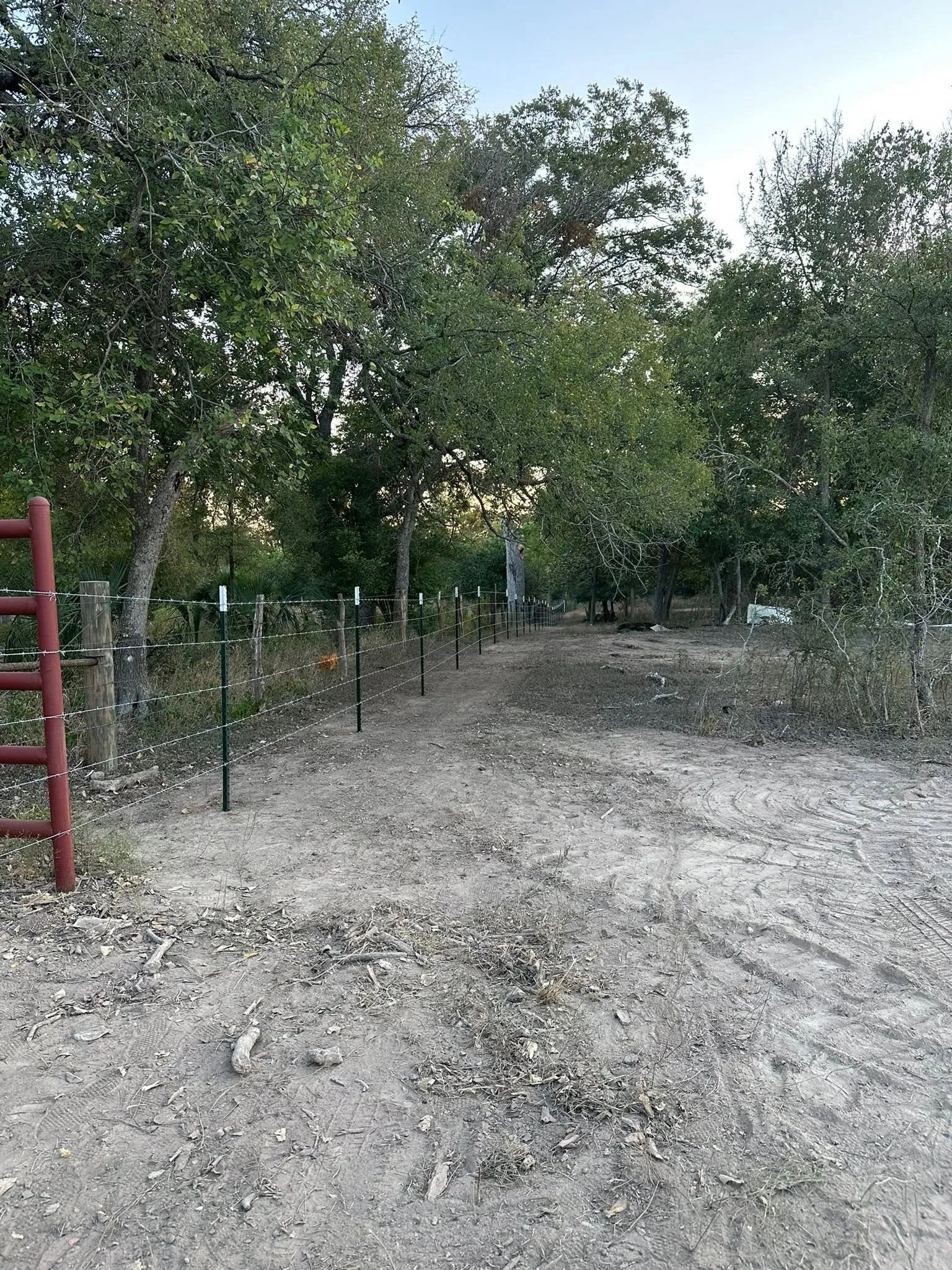
Red pipe gate barbed wire fence cleared dirt lane tree line